Moving investor contracts and payments into the app
I rebuilt the investor app so existing investors could sign and pay for new contracts in it. In the first month, 93% of contracts from the investor base closed in the app.

- Company
- Allu.Invest
- Role
- Product lead and sole product designer
- Years
- 2025-2026
- Platform
- Mobile app and internal system
- 93%of contracts from existing investors closed in the app in the first month
- R$14Mraised through the app in a R$30M record month
- 36%less time to complete registration
The problem
Two problems fed each other. Investors could not renew or start a contract on their own: the contract arrived by e-mail and the payment happened outside the app, so the app lost its value and investors complained about a slow, scattered flow. Account managers generated each contract by hand, outside the internal system, and waited for finance to confirm every payment. With an aggressive fundraising goal, the business needed managers to move faster without hurting the investor experience.
Allu.Invest is the investment arm of the Allugator group, with R$750M under management. Most fundraising happened through direct sales with account managers. The first app was view-only and had barely changed since 2024, and after the first investment the relationship moved to WhatsApp.
Contract and payment
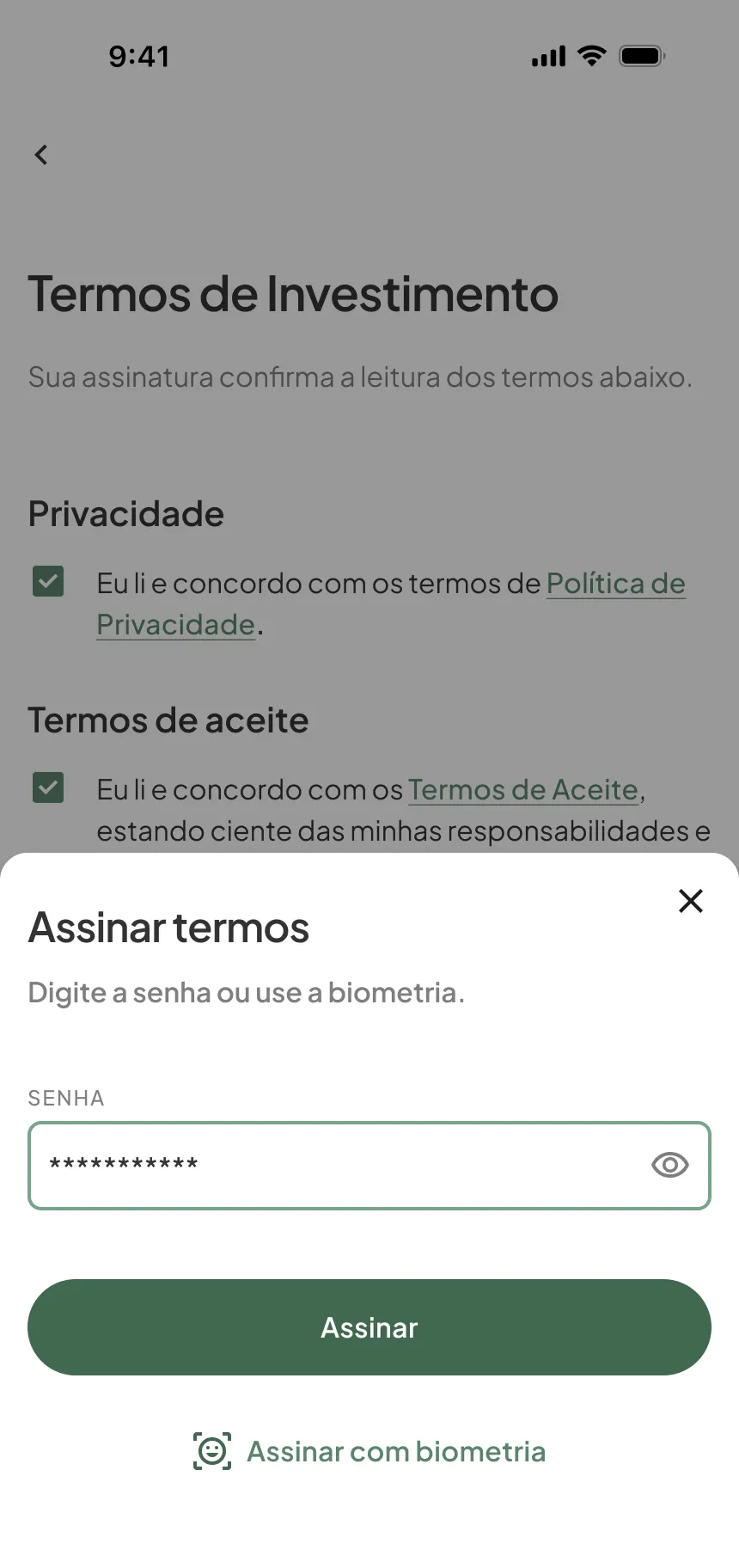
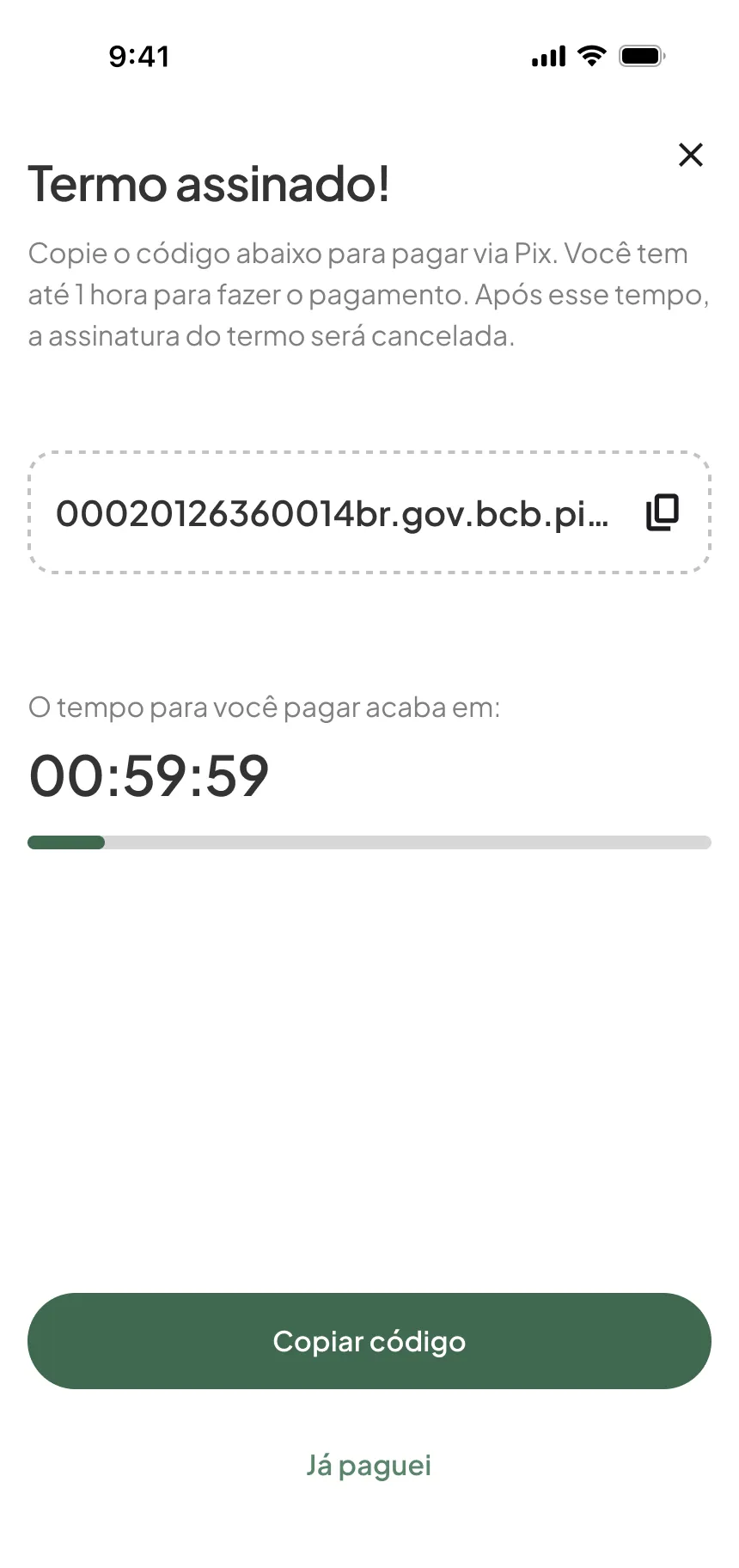
From the simulation to the contract in the portfolio, without leaving the app.
Registration
Fewer, better grouped steps with clearer guidance. Registration took 36% less time.
Key decisions
Design both sides of the contract
In the app, investors sign and pay without leaving it. Behind the scenes, I designed a section of the internal system where account managers generate the contract automatically: the system handles the signature, the app handles the investor. In the field, a manager took 10 to 15 minutes to generate a contract. It dropped to 3 to 5.
Trade-offTwo surfaces to design and ship in the same release, because fixing only the app would have kept the manual work behind it.
Pay with Pix, and only Pix
Each investment generates its own Pix code, paid in the investor’s bank of choice. Confirmation is instant, so the finance team left the payment verification flow entirely and moved on to work that had been waiting.
Trade-offFewer payment options, in exchange for instant confirmation and a whole manual process removed.
Keep the account manager in the loop
Research showed investors valued talking to their manager: it gave them confidence in the products and in the company. We chose to improve the contracting experience first instead of giving full autonomy.
Trade-offLess self-service than we could have shipped, to protect the trust that closes contracts.
Who I worked with
I was product lead and the only designer. I set the vision that aligned leadership and the heads of other areas, researched with investors and account managers, went through complaint records and product data, and worked with engineering on the app and the internal system. Registration was redesigned with fewer, better grouped steps and clearer guidance. The design system, evolved for Allu.Invest with the help of AI (Claude and Cursor), kept everything consistent and helped ship in about two months.
Results
In the first month after launch, 93% of contracts from existing investors, signature and payment, closed in the app. The business unit had its record month, R$30M, and R$14M came through the app; the rest were financial products that could not be sold in the app yet. Registration took 36% less time, measured in analytics before and after.
After launch
Next, I would test full autonomy against the current flow with control groups, and bring debentures to the new standard.